
1. Introduction to the 'Cut Test': The Radiography of Flavor
As bean-to-bar chocolatiers, our art begins long before the beans enter the roaster; it starts with the meticulous evaluation of the raw material. The cut test is a fast, cost-effective, and indispensable visual inspection method throughout the entire cocoa supply chain. More than a simple physical examination, it is a true biochemical radiography of the bean.
This test allows us to evaluate the internal structure, accurately determine the level of fermentation, and predict the true flavor potential before taking the critical step of roasting. In a market where fine flavor cocoa demands complex profiles, the cut test is the first line of defense against mediocrity, revealing whether the farmers managed to develop the proper flavor precursors.
2. How Is the Test Performed? (Technical Procedure)
Accuracy in the cut test depends on a standardized protocol. To ensure representative and statistically valid results, the step-by-step procedure is as follows:
Representative Sampling: A random sample is selected from the lot. International regulations (such as those of the FCC or ISO) recommend taking at least 300 beans extracted from different points of the bags to obtain an accurate reading of the entire lot.
The Cut: The ideal tool for this task is the cocoa guillotine, a specialized device equipped with hinges that allow its structure to open and close to accommodate the aligned beans. When closed with a single sharp strike, it cuts the beans cleanly lengthwise down the middle for quality analysis. Alternatively, a very sharp knife can be used, although the process is slower and carries risks for the hands.
Inspection Under Neutral Light: Under excellent illumination (preferably natural light or neutral white light), the halves are opened to expose the maximum surface area of the cotyledons. Each half is then counted and classified according to its internal, visual, and olfactory characteristics.
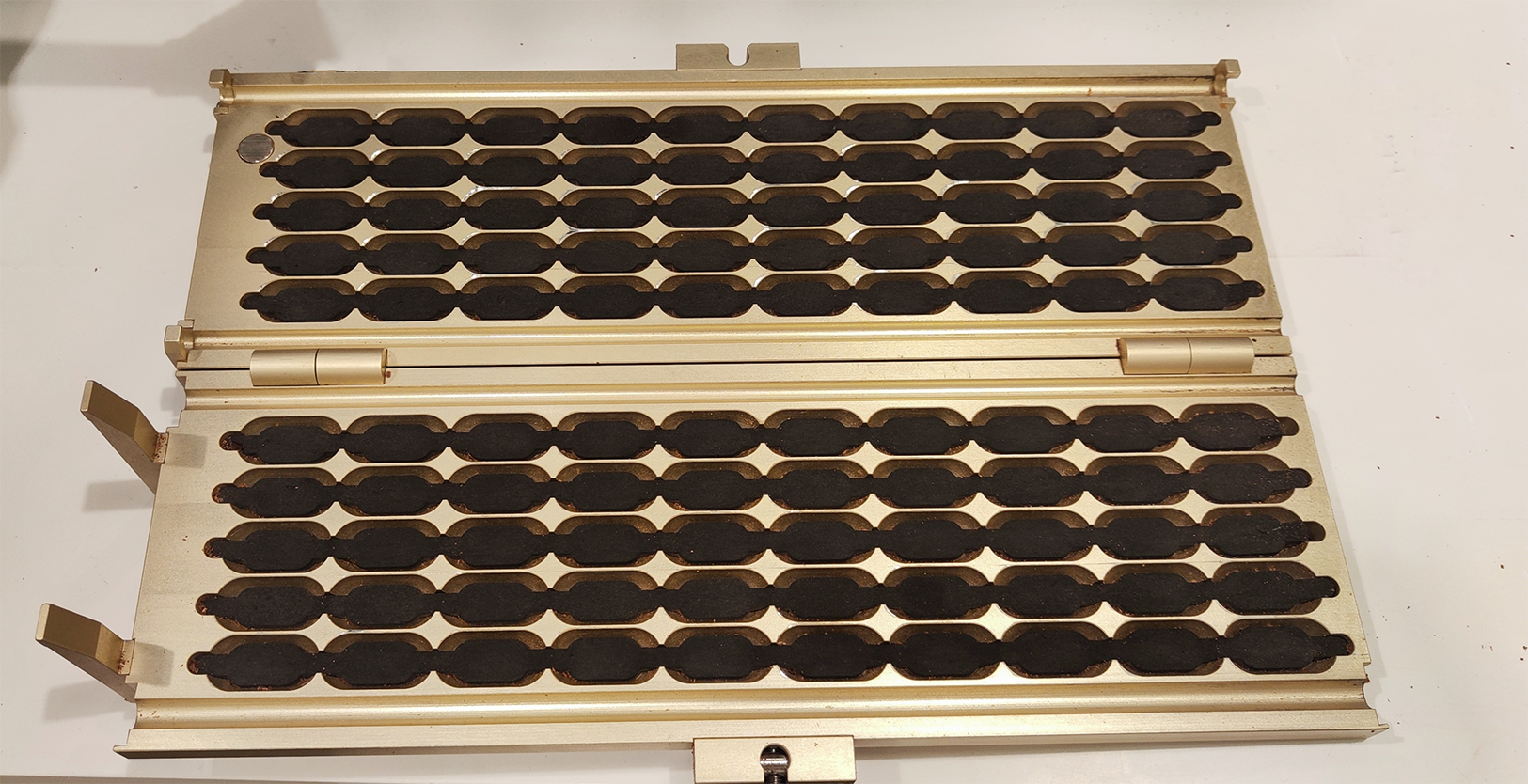
Magra guillotine, used in the Cut test
Source: CacaoWorld
3. Interpretation of Fermentation (The Heart of Flavor)
The interior of the bean tells us the story of its time in the fermentation boxes on the farm. There are three main categories of color and texture that will dictate the profile of the final bar:
Brown Beans (Well-Fermented)
These are the gold standard for fine cocoa. They present a rich brown or coffee color, with a brittle texture and deeply fissured cotyledons or well-defined internal ridges. Biochemically, these beans have undergone the proper transformation: proteins have broken down into amino acids and reducing sugars are ready for the Maillard Reaction. They have developed the correct flavor precursors (fruity, nutty, floral notes) and have lost extreme astringency, guaranteeing a balanced chocolate.
Purple or Violet Beans (Under-Fermented)
A bean that stopped halfway through the process. They are characterized by a compact, sometimes gummy structure, and an intense violet color due to the high presence of anthocyanins that failed to oxidize. A high presence of these beans will result in a chocolate with harsh notes, extreme astringency, sharp acidity, and a dominant bitterness that will overshadow any fine notes.
Slaty or Opaque Beans (Slaty / Unfermented)
The worst-case scenario for flavor development. They exhibit a grayish-black color with a glassy, smooth, and very compact texture. These beans did not undergo any fermentation or dried prematurely. They completely lack chocolate flavor precursors, contributing only a flat, earthy, and astringent bitterness to the blend.
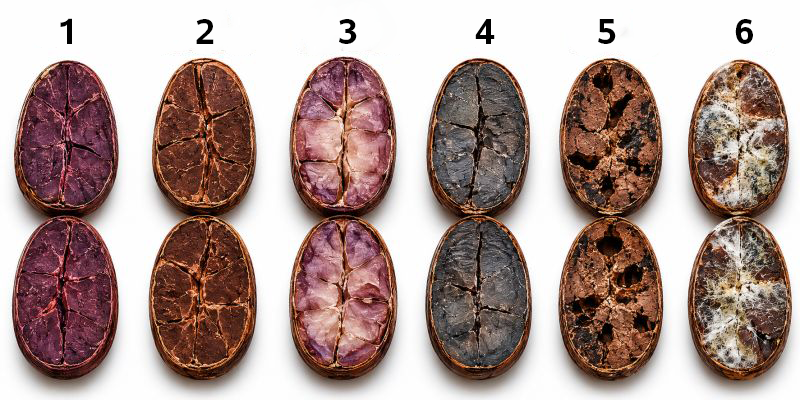
The cocoa cut test tells the story behind each bean, so when opening the sample, its various states must be evaluated in detail: first, violet or purple beans, which generally indicate cocoa with very little fermentation and are usually harsher, more bitter, and astringent on the palate; second, well-fermented beans, which represent the ideal result by showing a uniform brown color, pronounced ridges, and excellent flavor development; third, under-fermented beans, characterized by an irregular color with purple and pale areas that reveal an incomplete fermentation process; fourth, slaty beans, recognizable by their grayish, smooth, or slate-like appearance caused by a total lack of fermentation or premature drying; fifth, insect-damaged beans, which exhibit visible holes and internal damage that severely affect the quality and safety of the lot; and sixth, moldy beans, which present clear mold growth inside and constitute a critical defect that is totally unacceptable in quality cocoa.
4. Identification of Defects (Safety and Quality)
Beyond evaluating the degree of fermentation, the cut test is a critical sanitary filter to detect defects that warrant rejecting a lot or discounting its price:
Moldy Beans: Presence of mold (mycelium) inside the fissures of the bean. It is a critical defect due to the direct risk to safety and the possible generation of mycotoxins (such as Ochratoxin A). They contribute irreparable rancid, earthy, or musty flavors.
Insect-Damaged Beans: Perforations, galleries, or the presence of pest residues (such as moths of the genus Ephestia or beetles) infesting the cotyledon. They increase free acidity and ruin the mass.
Germinated Beans: This occurs when the embryo (the radicle) has grown and broken through the shell structure, usually due to over-ripening or poor handling prior to fermentation. It leaves a hole that facilitates the entry of molds and insects, and results in a lack of cocoa butter and deficient flavors.
Flat Beans (Pasilla): Shriveled beans or beans without useful cotyledon development. They consist almost entirely of shell, lack nib yield, and end up burning in the roaster.
5. The Grading System: Transforming Inspection into Numbers
The results of the cut test are translated into percentages to establish the commercial grade of the cocoa. For example, according to international standards, a Grade I Cocoa (the highest standard commercial quality) requires very strict tolerances:
Maximum 3% moldy beans.
Maximum 3% slaty beans.
Maximum 3% beans with combined defects (insect-damaged, germinated, flat).
For the specialty market (fine flavor), fermentation requirements are even higher, typically seeking more than 75% to 80% perfectly fissured brown beans.
6. Practical Application for the Chocolatier
Mastering this technique is not a mere academic exercise; it is a critical tool for profitability and product design.
Purchasing Decisions: It allows for the acceptance of premium lots or the rejection of those with safety risks (mold) or lack of flavor (slaty).
Roast Curve Design: Knowing the exact composition of the lot helps adjust the thermal strategy. A lot with predominantly well-fermented (brown) beans allows for softer and lighter roast profiles, exalting subtle and floral notes. Conversely, a lot with a higher percentage of violet beans will require a slightly longer or more intense roast to help volatilize residual acetic acids and mitigate astringency.
Consistency: Documenting the cut tests lot by lot ensures that your bars maintain the same quality standard throughout the year.
7. Bibliographic Sources
Cacao of Excellence. Guidelines for the Assessment of Cacao Quality and Flavour (Bioversity International).
CocoaSupply. The Cocoa Cut Test Explained: A Practical Guide for Chocolate Makers and Buyers.
Coeur de Xocolat. The Cocoa Cut Test: A Practical Guide for Quality Cocoa.
International Cocoa Organization (ICCO) / ISO 2451 Standards on cocoa bean quality specifications.